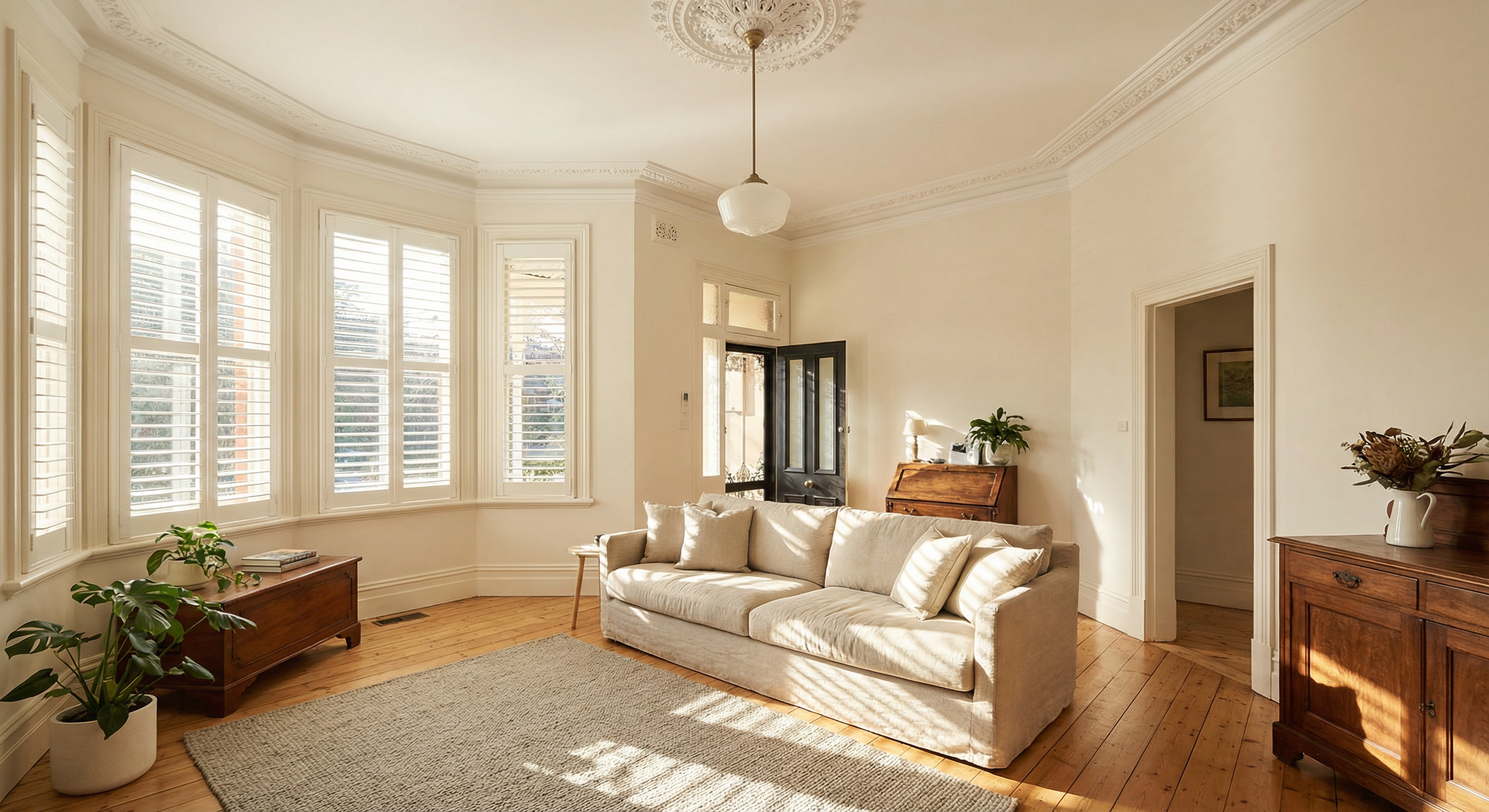
Painting Rooms: Walls & Ceilings. What You Need to Know
Interior walls and ceilings are the canvas of your home. Getting them right means proper prep, the right products, and clean edges. Here's what goes into a professional room paint.
A fresh coat of paint on your walls and ceiling can transform a tired room in a weekend. But the difference between a job that looks good for a year and one that lasts a decade comes down to prep, product choice, and technique. Here's what professionals do differently.
Prepping Walls & Ceilings
Before any paint goes on, the surface needs to be clean and sound. Interior prep is less weather-dependent than exterior, but it's no less important.
- Wash down: Sugar soap or a mild detergent removes dust, grease, and kitchen residue. Skipping this leads to adhesion failure and patchy coverage.
- Fill and sand: Nail holes, hairline cracks, and dents need to be filled, sanded smooth, and primed. Unfilled imperfections show through every coat.
- Stain blocking: Water stains, nicotine, or silicone residue need a dedicated stain-blocking primer. Otherwise they'll bleed through within weeks.
- New plaster: Must be sealed with a mist coat or dedicated primer before topcoats. Painting straight onto bare plaster soaks up moisture and gives an uneven finish.
Choosing the Right Products
For interior walls and ceilings, I typically use Dulux Wash&Wear or Dulux envirO2. Both are low-sheen finishes that hide minor imperfections and are easy to wipe down. For ceilings, Dulux Ceiling White or the Kitchen and Bathroom variant handles humidity better in wet areas.
The key is matching the sheen to the room. Low sheen works for most living spaces. Bathrooms and kitchens benefit from moisture-resistant products. Ceilings often use a flat or low-sheen product to minimise glare and hide surface variations.
Cutting In and Rolling
Professional application starts with "cutting in": brushing the edges where walls meet ceilings, skirting, and architraves. This creates a clean line that a roller can't reach. Then the main area is rolled in overlapping "W" or "M" patterns to avoid lap marks.
Keeping a wet edge is critical. If one section dries before the next is applied, you get visible lap marks. In a typical room, that means working systematically and not stopping mid-wall.
Ceilings: The Overlooked Surface
Ceilings get less attention than walls, but they collect dust and can show yellowing from age or smoke. Painting a ceiling is physically demanding (working overhead for hours) and requires careful cutting-in where the ceiling meets the wall.
Inner West terraces often have detailed cornices and picture rails. These need careful brushwork rather than roller coverage. A professional will cut in around these details first, then roll the main ceiling area, ensuring no drips or missed spots.
Why Hire a Professional?
Interior painting is more accessible than exterior, but a professional brings consistent coverage, clean edges, full protection of floors and furniture, and the right products for your surface. Single-room or full-house jobs are quoted based on the paintable area and your chosen finish, from budget refresh to premium multi-coat systems.
Ready to Refresh Your Room?
I work across Sydney. Get in touch for a professional interior painting quote.