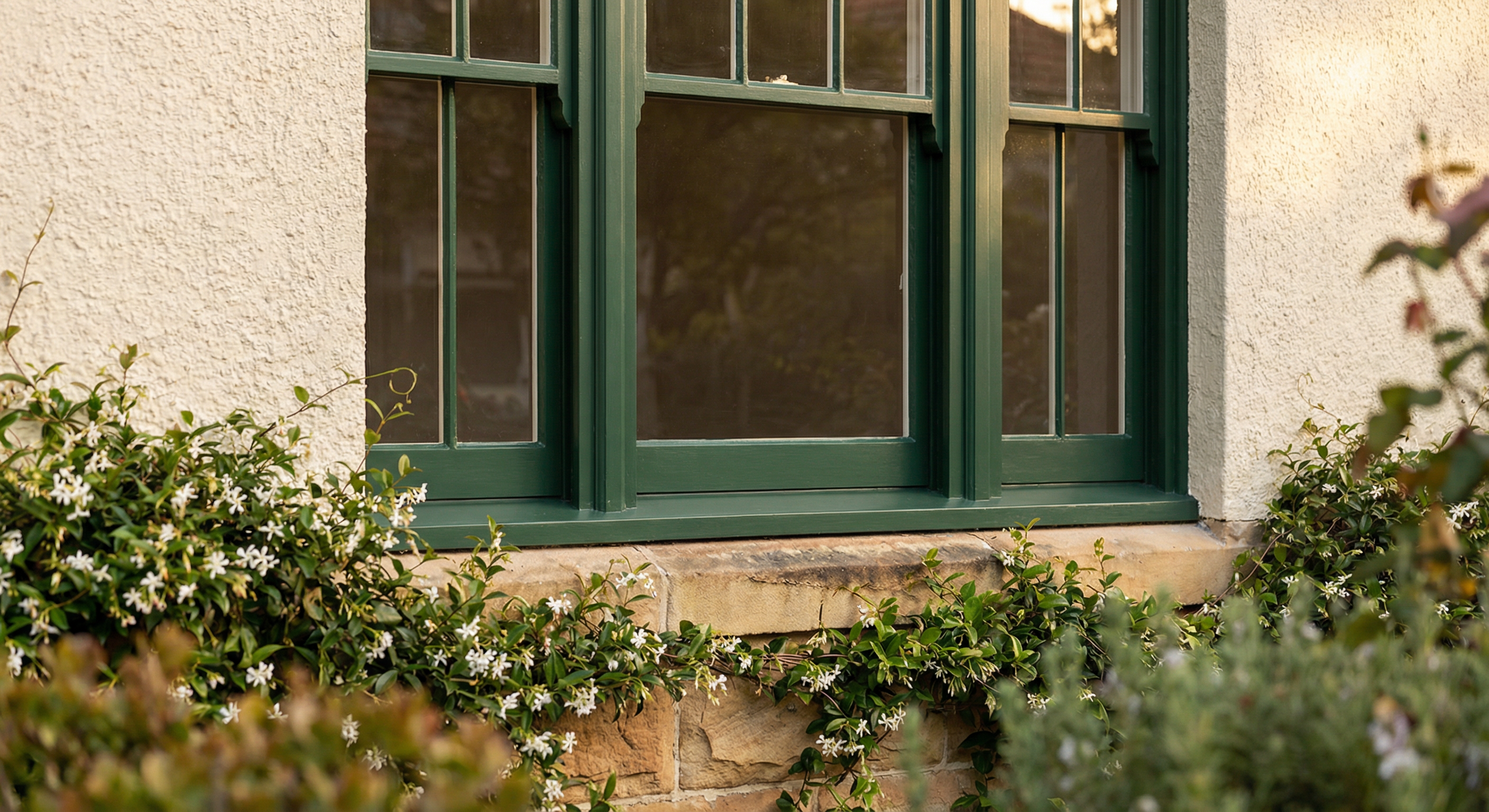
The Art of Painting Heritage Timber Windows & Doors
Timber windows and doors are some of the most rewarding, and most unforgiving, elements to paint. Get it right and your home looks sharp for years. Get it wrong and you're left with stuck sashes and peeling frames.
Across the Inner West,from the Victorian terraces of Balmain to the Federation homes of Leichhardt and Stanmore,original timber windows are one of the defining features that give these homes their character. They're also one of the trickiest elements to paint properly.
Why Timber Windows Are Different
Unlike a flat wall or a fence, windows have multiple moving parts. Sashes slide up and down. Frames sit in reveals. Glazing bars hold individual panes. Every one of these elements needs to be painted without being glued shut by the paint itself.
Heritage homes often have double-hung sash windows with decades of paint buildup. Each coat adds thickness, and eventually the sashes bind, the pulleys seize, and the window stops functioning. A proper paint job doesn't just look good, it restores the window to working order.
The DIY Approach
Most DIYers tackle window painting with masking tape and a small brush. The typical process:
- Mask off the glass with tape
- Lightly sand the existing paint
- Brush on a coat of exterior paint
- Pull the tape off and hope for clean lines
Where DIY Goes Wrong
- Not stripping old paint properly: If there are already 10+ coats of paint on a window, adding another just makes the problem worse. The sashes get tighter, the profiles lose definition, and the window eventually stops working. Sometimes you need to strip back to bare timber and start fresh.
- Ignoring glazing putty: The putty that holds the glass in place deteriorates over time, it cracks, shrinks, and falls out. If you paint over crumbling putty, moisture gets behind the glass and rots the timber from the inside. A professional rakes out the old putty, applies new linseed putty, lets it skin over, and then paints.
- Painting windows shut: This is the most common DIY disaster. If you don't move the sashes during drying, the paint bonds the sash to the frame. Breaking it free later often chips the new paint or damages the timber.
- Skipping the "paint seal" onto the glass: Counter-intuitively, you actually want a tiny bead of paint to overlap from the putty onto the glass by about 1-2mm. This seals the junction and stops moisture from getting behind the putty. Masking tape prevents this seal from forming.
- Using the wrong paint: Interior paint on exterior windows will fail within a year. And thick, rubbery exterior paints can build up in the rebates and stop the sash from sliding. You need a product that's durable but doesn't build excessive film thickness.
The Professional Process
Painting timber windows properly is slow, detailed work. Here's what's actually involved:
- Remove or free the sashes so they can be accessed from all sides
- Strip back any excessive paint buildup by scraping, sanding, or using a heat gun
- Rake out and replace any failing glazing putty
- Fill any dents, cracks, or rot with an appropriate timber filler
- Prime all bare timber with an oil-based primer
- Apply topcoats with a quality brush, cutting in precisely along the glass edge
- Move sashes during drying to prevent them from sealing shut
Front Doors: The First Impression
Your front door is the most scrutinized painted surface on your home. Visitors stand in front of it waiting. Buyers stare at it in listing photos. A well-painted front door with crisp edges and a smooth finish makes the entire facade feel cared for.
The preparation is similar to windows, sanding, filling, priming, but front doors also benefit from a light sanding between coats to achieve a truly smooth final finish. High-gloss or semi-gloss finishes show every imperfection, so the prep has to be meticulous.
Why Hire a Professional?
Timber windows and doors are precision work. A professional knows how to strip back decades of paint without damaging the timber, how to replace glazing putty properly, and how to paint a sash window so it still opens and closes afterwards.
For heritage homes across the Inner West, this kind of detail work is what preserves the character of the building. It's the difference between a house that looks "freshly painted" and one that looks "properly maintained."
Heritage Windows Deserve Expert Care
I specialise in timber window and door painting across Sydney. Whether it's a set of Federation double-hung sashes or a statement front door, I bring the patience and precision these details demand. Get in touch for a quote.