Verandas & Balconies: Getting the Finish Right the First Time
A veranda or balcony is where your home meets the weather. Multiple surfaces, multiple products, and no room for shortcuts. Here's what's really involved.
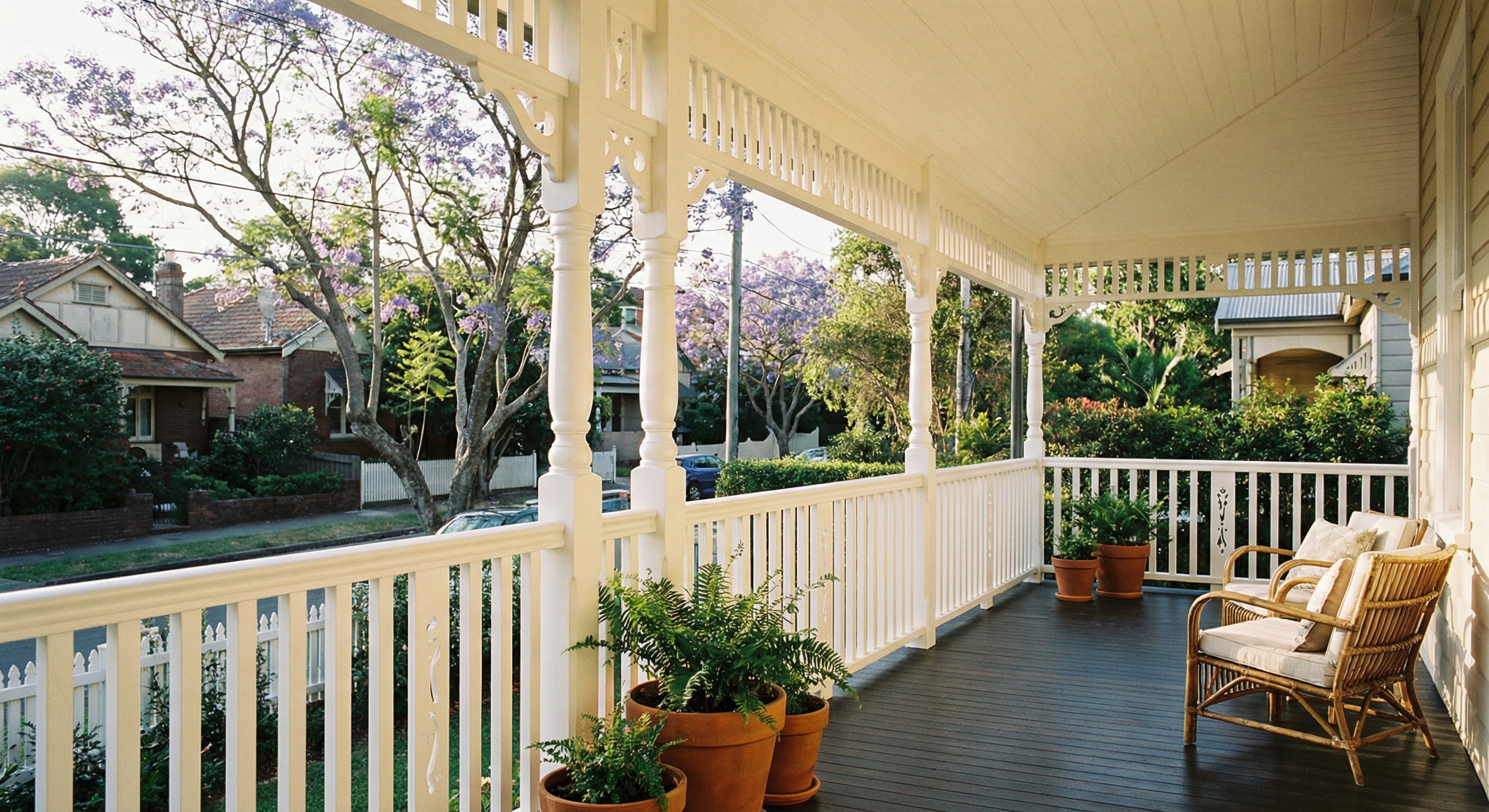
Verandas and balconies are some of the most complex exterior painting jobs because they combine so many different surfaces in one area. Floors, balustrades, posts, ceilings, and decorative trim, each one needs different preparation, different products, and different techniques. Across the Inner West, from the wide verandas of Ashfield to the ornate balconies of Newtown, these spaces define the character of a home.
The Multiple Surfaces Challenge
A typical Inner West veranda might include:
- Timber decking or concrete floors: These need hard-wearing floor coatings that can handle foot traffic, furniture, and weather exposure.
- Balustrades and posts: Usually timber, facing direct weather. They need thorough sanding, priming, and a durable exterior topcoat.
- Veranda ceilings: Often tongue-and-groove timber or fibro. These collect moisture from below and heat from above.
- Decorative trim: Federation verandas often have ornate fretwork, turned posts, and detailed brackets that need careful brush work.
Each of these surfaces needs a different product and approach, you can't use the same paint for a floor that you use on a balustrade.
The DIY Approach
Most homeowners approach a veranda repaint with a single tin of exterior paint and a broad brush. The typical process:
- Give everything a quick sand
- Paint the railings and posts
- Paint the ceiling
- Paint the floor last
Where DIY Goes Wrong
- Painting over rot: This is the biggest mistake. Verandas are exposed to weather on multiple sides, and timber rot is common in posts, floor joists, and balustrade bases. Painting over rotten timber is a waste of time and money, the paint will fail within months, and the rot will continue spreading. A professional inspects for rot before any paint goes on and recommends repairs where needed.
- Wrong product on the floor: Standard exterior wall paint on a veranda floor will wear through in weeks. Floor coatings need to be specifically formulated for foot traffic and should include a non-slip additive for safety, especially on covered verandas that get morning dew.
- Skipping the ceiling: Veranda ceilings are overhead and awkward to paint, so many DIYers skip them. But a freshly painted balustrade next to a dingy, flaking ceiling looks worse than leaving everything alone.
- Rushing the decorative trim: Federation fretwork and turned posts have complex profiles with lots of edges and recesses. A quick once-over with a brush leaves missed spots that are visible from the street. This work needs patience, small brushes, and multiple angles.
- Not planning the sequence: If you paint the floor before the ceiling, drips from overhead work land on your fresh floor. If you paint the railings before the posts, you can't access the back of the posts. The order matters, and getting it wrong means touch-ups that never quite match.
Slip Resistance: A Safety Requirement
Veranda and balcony floors need to meet slip-resistance standards, especially if the surface gets wet. This isn't just good practice, it's a safety requirement. Professional floor coatings include non-slip additives, and the application technique ensures even distribution so there are no slippery patches.
Why Hire a Professional?
A veranda repaint is really 4-5 different jobs in one space. A professional knows which product goes where, inspects for rot and structural issues before painting, works in the right sequence, and has the patience for detailed trim work.
For heritage verandas across the Inner West, the decorative details are what make the home special. Rushing them, or using the wrong technique, loses the character that makes these homes worth preserving.
Bring Your Veranda Back to Life
I paint verandas and balconies across Sydney: floors, balustrades, ceilings, and all the decorative details. Proper prep, proper products, and the patience these spaces deserve. Get in touch for a quote.